Finding Emotion from Song: music in anthropological research
As an anthropologist, I know that surveys are not exactly easy to write. A lot of people will think they are, and those people probably write quite bad surveys. There’s an art to them - and I’m not saying I’m perfect at them, but I at least know they’re difficult to do.
When it comes to drafting a survey, you have think more about what kind of information you’re wanting - which an important distinction from thinking about what kind of answers you want. By information is it: stories, raw data, short answers, participants’ emotions? These all require not only different questions, but different types of questions.
Today, I want to talk about music elicitation - a technique used in qualitative research, both in surveys and in longer-form interviews - and why it can be useful. And I’m particularly going to be using examples straight from my own survey.
I’m in the middle of doing a long-form research project into the Mythology of Taylor Swift. One part of the data gathering is a survey. You can go take the survey still, or at least just check it out to see how I’ve laid it out and what kinds of questions I’m asking.
What Is Music Elicitation?
Music elicitation is the use of music in qualitative social science research. Essentially, the researcher presents the participant with a song as a jumping off point for the discussion or conversation. Sometimes, music elicitation is also used in the opposite direction, where a researcher can ask a participant to pick a song or make a song which encapsulates the topics they want to cover or the sentiments they feel.
Music is a useful tool because of how it bridges the gap of feeling and communication. Some people find it really hard to articulate their emotions, especially when talking to a researcher who is, more often than not, a complete stranger. Music can help bring clarity to more complicated to explain feelings, while also making participants feel more at ease.
The exact way this looks can vary depending on the researcher and the research question. But a researcher could have a participant pick a song which encapsulates a feeling, or play a song and ask for the participant to respond in some way. Obviously, the exact nature of the question and the exact nature of the request for response is going to be dependent on the research
While music elicitation is more often used in one-on-one interviews, they do also still have a place in surveys as well. So, in order to really get into what music elicitation can do, let’s actually stop talking about hypotheticals and maybes and actually use some examples. Let’s use my own survey into the Mythology of Taylor Swift as our example.

The Taylor Swift Example
Obviously, I’m doing a study of a musician, and so it would seem quite silly to go so long without actually talking about the songs. Despite many parts of the survey giving room for participants to talk about the songs - for example, one of the very first questions is “whats your favourite song(s) and why” - there is a particular reason why music elicitation is far more useful than just asking for participants their favourites.
For one, despite the questioning coming with an added “and why”, participants very rarely actually articulate this, and you have to plan on that. But the second reason is the type of response I’m looking for. I want participants to have to really think about a song and tell me their earnest considerations on it, as if someone was chatting to them at a coffee shop, and the song played over the speakers, and their friend started talking about it.
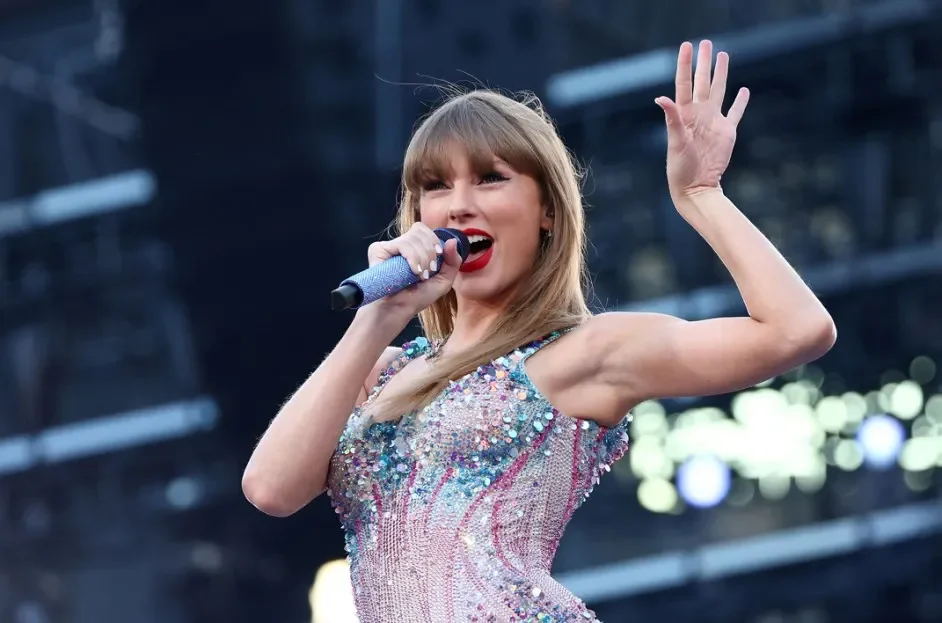
In my survey, there were eight songs given to participants, and they where asked to simply tell me their thoughts. The reason why I gave them eight songs, and asked so vague a question, was for several particular reasons:
(1) getting respect from participant - if I only provided top songs or primary hits from Taylor’s discography, or didn’t include songs at all, the participants would have no knowledge of where my own position was coming from. Showing participants that have an actual knowledge of the breadth of Taylor’s discography gives me added respect from those answering, which helps to grow comfort in those responding, as well as foster good will in the community. Not to mention, they’re more likely to send it along to a friend - more data.
(2) looking at how someone responds is just as interesting as what they say - we’re going to talk more about this in the next section, but the openness of responses means participants can respond the way they generally want to - unguided by own expectations. This means they’re more likely to respond with they genuinely find important and meaningful.
(3) I’m wanting stories - longer answers, and long answers prompted by a song, is more likely to elicit detailed responses of stories. What these stories are is determined by (2), but they tend to be able to spend longer there, and develop stories, which is something I’m interested in gathering.
So, by using music elicitation in a very simple and clear way, I’m not only able to talk about the songs more directly - a plus for my data - but also grow respect, gather new information about the participant, and also get the type of answer I’m wanting: stories.
So, now, let’s look a little more into that second response: looking at how someone responds is just as interesting as what they say. So, what types of responses do we get?
Taylor Survey Response Typology
As I said, the way someone responses, or the types of response they give, can give me a lot of information before actually digging into the meat of the actual words. In my own study of the Mythology of Taylor Swift, music answers fell into seven categories
Just as a note, all of the examples I’m giving in this all come from the same song: Maroon, from the album Midnights.
(1) music production and style
Maroon is so vibey to me.
I love listening to it in the car when it’s raining and I’m just need that “right” song to fit the rainy drive mood (#13)
synth/bass heavy; feels fake because of it. i feel like it’s not bad, but i would like it better if it were acoustic (#136)
(2) whether they like it or not
This one feels pretty middling as a song off of this album. (#7)
It’s my favourite song in Midnights, I can listen to it whenever (#17)
(3) attention and attraction to lyrics
This is one of my favourite songs on the Midnights album. I really loved them way she weaved so many shades of red through the lyrics. (#37)
The rust that grew between telephones is such a poetic way to say you grew apart. Taylor is always throwing out brilliant one liners like that. (#64)
(4) discussion of a surface level song meaning
Friendship > Love > Loss (#51)
It’s about the deepness of moments other life that she calls Maroon (#119)
(5) Taylor’s life and the song
The fact that we all thought it was Jake gyllenhaal when the Matty Healy tea was right there 🫣 (#34)
Love this song I believe it is about her experience with another woman I vibe with this song (#85)
(6) Emotional responses
I love this song. So satisfying to sing to, give me autumnal vibes, lyrically it’s heartbreaking yet exciting. (#30)
Sad (#46)
(7) Personal Reminiscence
It wasn’t one of my top songs off Midnights, but I heard it in the acoustic set and loved it more. I ended up hearing it on night one in LA on 8/3/2023. Good memories. (#57)
This song makes me think of singing while driving. A shift from the early albums when I would have been the passenger!! (#138)
Combination
A combination can, and often does, happen. For example, #10 combines all sorts of different approaches:
I enjoy the overall melody and lyrics of it. Depending on which side of the fanbase, it could be about Jake G, Joe A, or Karlie Kloss. I think its a play on Red, where she always saw Red as the colour of passion and love, but realises that a deeper connection and love is maroon. And its a bop to sing along with
What I Learn From It All
How someone chose to respond can illuminate new information on previous questions, or also show how they personally connect to the songs and to Taylor directly. For example, I had someone previously talk about hating how the fanbase often reads too far into her lyrics, and connects everything to who the song is about, and then every music response was filled with the connections to Taylor’s life. This kind of cognitive dissonance shows how far interwoven this kind of biographical reading is to the community.
Personal stories are also so important in thinking about how someone listens to music. What things are privileged, and what is the focus. The general “I like it” crowd tends to not really intersect with the crowd who focused on music production - one focused more on how the song was put together to determine their interest, while the other either did or didn’t like and didn’t explore more into the matter.
How someone responds shows how music directly relates to participants’ emotions, memories, thoughts, and reveals elements of taste and class, just to name a few.
Obviously, when studying a musician or a music fanbase, music elicitation seems like an obvious choice - but I think it can provide far more usefulness outside of this.