Nolan's The Odyssey: thoughts from a myth specialist
So, I saw Christopher Nolan’s The Odyssey, and I have thoughts. And I’m going to let you strap in for this, because I think my opinions may surprise you.
Today, in order to really understand Nolan, we’re going to dig into mythology and how it works and lives. Today, we’re talking mythic variants, mythic telling, and adaptation - all focused in on the Odyssey.
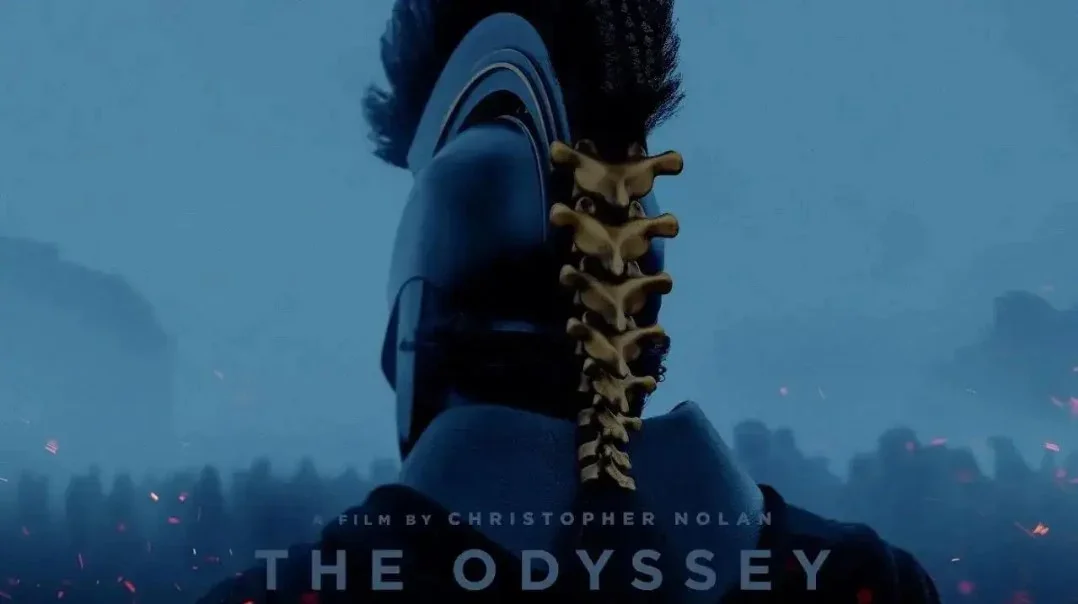
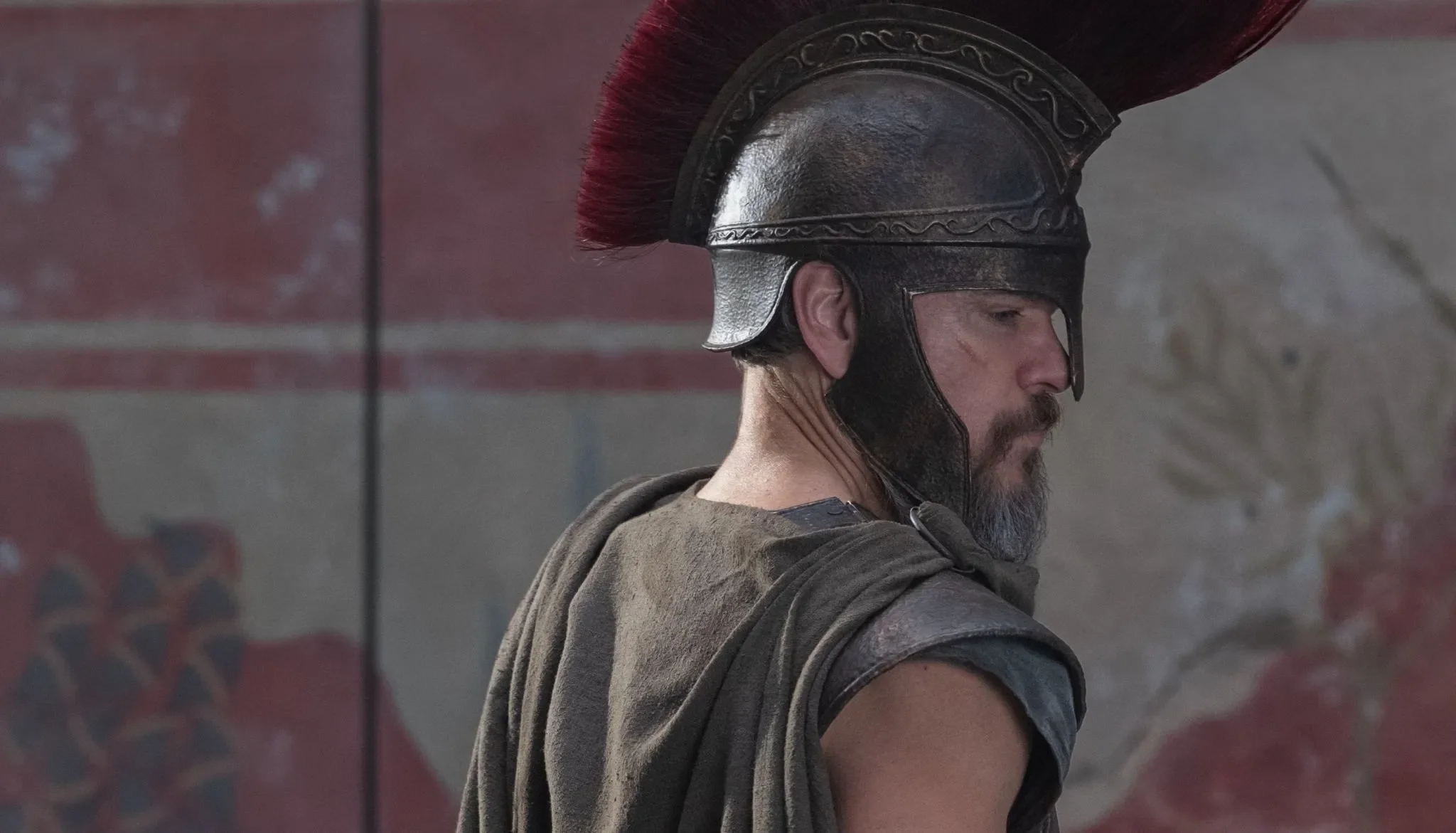
I want to start with Agamemnon’s helmet. I mean, technically, his whole armour set, too, but I particularly love this helmet with the bones in the horse hair main. I love this helmet. It’s so cool. It’s so rad. It’s so wonderful. I want a replica of it right now for my office.
But beyond that, I think this helmet captures something really interesting about Agamemnon, especially from Odysseus’s point of view - the viewpoint we have for most of the film. Agamemnon is a staggering figure, a hugely great king who has stature over Odysseus. He’s also an evil force, a person who cares more about his showing and his image than about the grit of actually making decisions. His armour isn’t just dark and covered in bones, but also is clean and precise. Even in the middle of Troy, while the other Greek soldiers are dirty and sweaty and broken, Agamemnon stays perfect in his image.
And yet, this armour caused a lot of controversy. Many decried it as being not very historically accurate. When the first image of it showed, people began calling it the “Batman armour”. But… is it historically accurate? Which history are we talking about?
In talking about Nolan’s the Odyssey, many commentators keep referencing how faithful he either is or isn’t to the “original”. Which leads me to want to talk about adaptation, like I have for Frankenstein. But unlike Frankenstein, the original for the Odyssey is a lot more complicated of a question than it is for Mary Shelley. So, before we can talk about the nature of adaptation, we have to first ask: what exactly are we adapting?
Mythic Variants
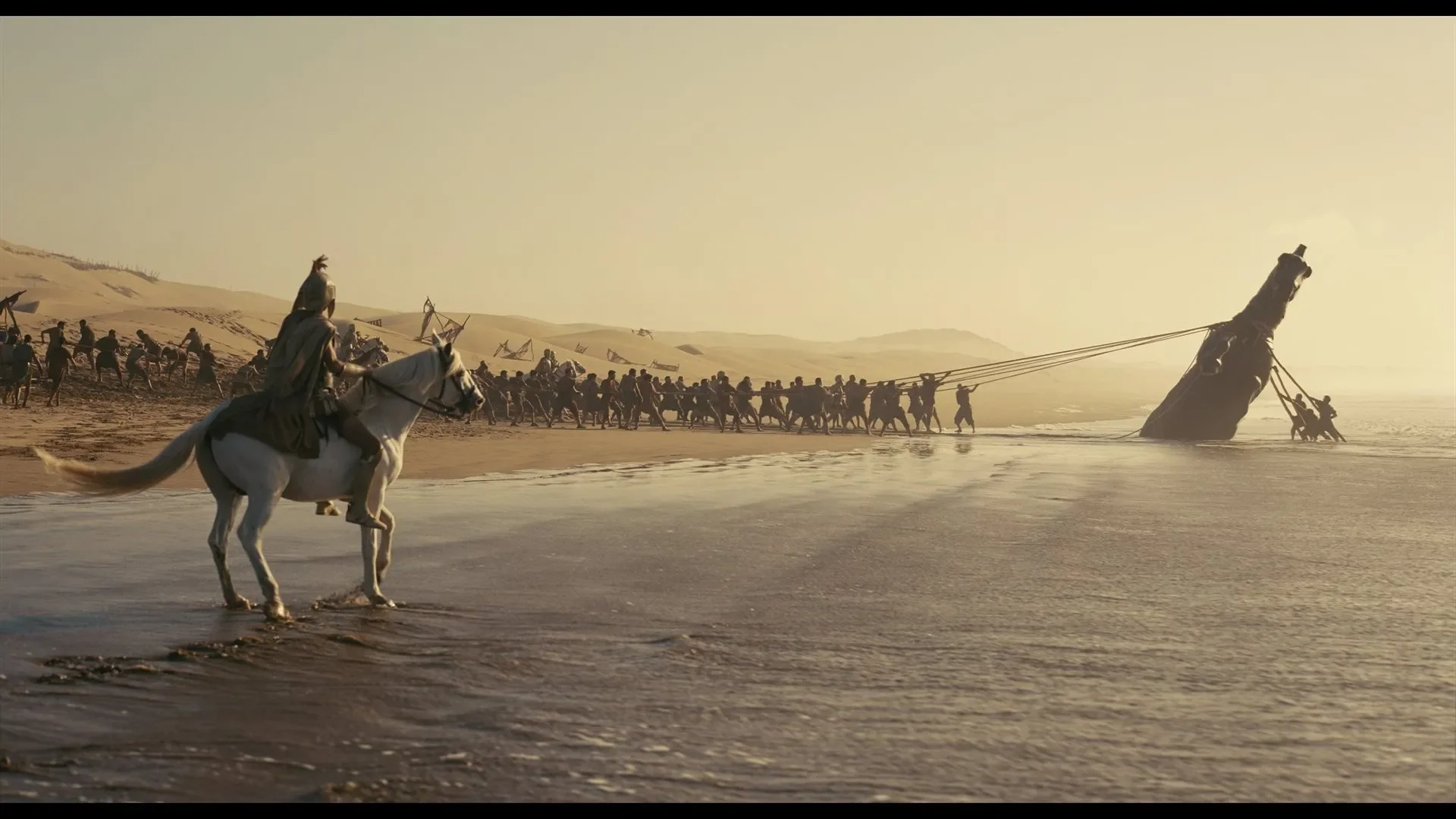
I hope to convey one very important thing: there is no such thing as the original version of the Odyssey.
The story’s exact origins are not exactly clear. The compilation of the stories we have now come to think of as being “The Odyssey” was probably compiled around the 8th or 7th century BCE. However, most scholars agree now the Homeric version was only the written version of a story which has been long part of an oral tradition - or at least, parts of the story were at the very least. This means the “original” predates this written compilation.
Variations and alterations in narrative were and are incredibly normal for myths more generally, and are especially relevant when we’re talking about stories in the oral tradition. This is not due to a failure in oral recitation. Rather, stories change because of storytellers.
To better understand, we should look at one of those structural anthropologists I keep referencing: Seth Kunin. Kunin talked about the nature of mythology, and how storytellers actively change stories - emphasising some parts, de-emphasising others, altering small elements - in order to adapt to the audience they are reciting to. This can be emphasising kingliness when in royal halls, while altering this when reciting to the masses. It can also happen to either adapt to cultural changes, or push for these cultural changes to happen. Storytellers have agency, and they use the power of narratives and storytelling in order to alter culture, or to allow the stories to continue to thrive in new cultural environments by altering and tweaking the story as necessary.
The A-Historical Nature of the Odyssey
Just so you know, this subtitle is not about the movie. I know - many of you were probably expecting this conversation. But something to keep in mind before talking about Nolan’s version, is to understand the Odyssey itself is ahistorical.
Throughout the text, the written version many are heralding as the “original”, there are references to different cultural practices which span actually a variety of different time periods. There is reference to bronze weapons, a marker of the Bronze Age, but the soldiers also have a practice of burning the dead rather than burying - a practice adapted in the Iron Age. The description of large shields are from the Mycenaean era, while the small shields are Bronze Age. In the Iliad, Odysseus is described as having a helmet made of boar tusks, which is a practice dating from 1600 - 1150 BCE.
In other words, the written version of the Odyssey - if that’s what we’re working with as a set “original” - then even that isn’t technically fully historically accurate either.
Tied to this, historians argue over when the sacking of Troy happened, of even if it happened at all. Therefore, its hard to argue when these additions - if they are additions - were added. Or if this is simply a reflection of the way stories are alive, compiled and added to and adjusted across centuries, and thousands of storytellers agency and beliefs and alterations. The idea of one giant sacking of Troy could just be a story - one which has been built around a reality of multiple sieges over times, all brought together throughout the years to make it sound like one giant war.
Retellings and Translations
There are other forms of retelling than just oral tradition. The written tradition also has its own storytellers - in the form of translators. Translators are a product of their own time and space, and can make alterations, either consciously or unconsciously, to reflect this.
One example of this can be seen in Emily Wilson’s 2017 translation, which altered a lot of the language previous translators had chosen which reflected the more sexist nature of our culture. Both the previous translators and Wilson herself are both products of our own time and experience, and bring this to their own retellings.
Contemporary storytellers therefore also do the alterations of oral storytellers. They make choices in the narrative, emphasising or de-emphasising depending on the messages they wish to convey - and this can be done both consciously as well as unconsciously.
And So, What About Nolan?
Adaptation and retellings have already been happening to the Odyssey before Nolan even got his hands on it, and that’s just the written text. Before it, adaptation, alterations and retellings existed, too.
Alteration to the text is actually what keeps myths alive. Alterations and retellings allow us to keep a story relatable, even when its being told to a completely new audience in a completely new context. Even if the story is being told in the same exact spot on the earth, the people and times change - the audience will change. But stories don’t stay in one spot, they move. And people who have lived in that part of the world have also moved, bringing their own stories and traditions with them, which then mix with the new environments, altering both lands’ stories. And then it happens all over again.
So, let’s talk about Agamemnon’s rad-ass helmet. Yes, it’s ahistorical - but so is the whole thing, really. So is Agamemnon as a person, as a character. So is the story he finds himself in. And so, is his helmet really all that out of place? It does something really wonderful - it situates the story in feel rather than in time - which is far more important for a myth. And for a movie.
I also want to bring up some really interesting themes which really came to the fore when I was watching the movie. Nolan’s piece seems to carry with it some really interesting commentary and themes on both immigration and war.
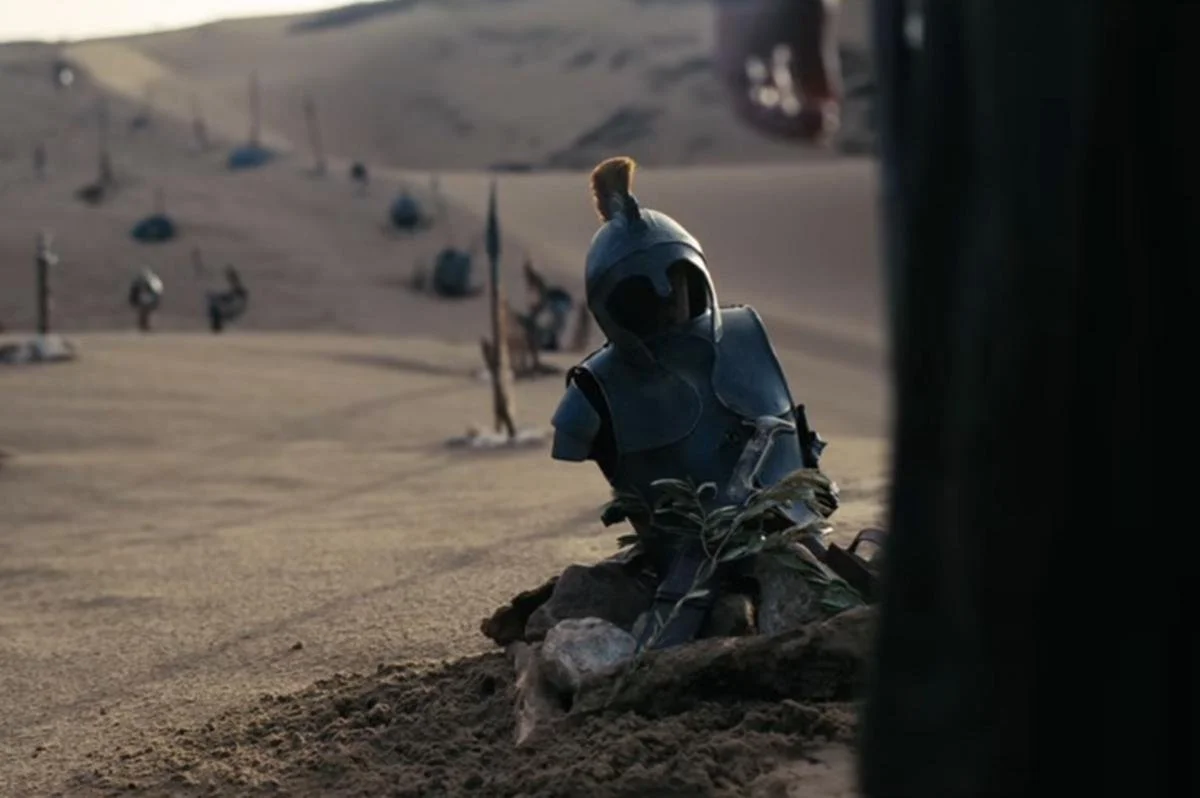
War is portrayed as horrific. Odysseus spends the movie traumatised from his experience, a marked difference compared to other variants of the story I have personally explored. He sees the sacking of Troy as inherently negative and un-glorified, and turns all the hatred he witnessed turned on himself for allowing it. The horse was his idea, and therefore all the death and destruction stains his own hands.
Tied to this is the commentary on immigration. In the written version of the Odyssey (at least the translation I’ve read) there is a great import on hospitality rites. Nolan picks up this theme, but emphases the need to respect and care for the stranger. It becomes tied directly to modern immigration, and the pressing need to support, love and connect to those who show up in need.
When the Statue of Liberty herself is not able to convince a society to care for “your tired, your poor, / Your huddled masses”, then maybe Odysseus can. But maybe I’ll save the rest of this for a fuller study at a later date.
So, all in all, give me some batman armour with his rad bone hair on Agamemnon. Give me your strange retellings with combinations of history clashing together to highlight a culture in all its glory.
It’s all myth anyway.