I realise, about sixteen months into this substack, I haven’t actually explained anything about it. I’d like to think it’s come out in more obvious ways just from what I do and quick summaries of why I’m looking at popular culture the way I am. But still - I haven’t properly sat you down and explained what on earth I mean by “Incidental Mythology”, why it works, how I got here, and why I’m even doing it.
But it’s my birthday month! Like, my personal one, not Incidental Mythology’s. And these are times for reflection and thought, thinking about what we’ve done with our lives up until now. And Incidental Mythology is perhaps one of the things I’ve done I’m most proud of. It’s slow growing, but consistent, and firm, and I have seen how it resonates with people.
So I want to now - sixteen months into its life here on substack, and several years into its life on YouTube - take a step back and explain everything there is to know about my work here.
Incidental Mythology is exactly what the name suggests. Its the idea there exists mythology that is not so on purpose, but rather just happens to be so. Everything I do is based on studying popular culture as mythology, not because some incredibly genius writer drafted the piece to be mythic (though this can happen), but because popular culture just happens to be mythic. It just is, incidentally.
What’s in a Myth?
Obviously, the mere idea the Fast and the Furious can be on par with something like the Enūma Eliš is the biggest push back. And I get the frustration. Popular culture has, historically, been seen as low brow and unimportant. Pop Culture is set against fine art. Fine art, of opera and ballet and paintings, is held up as culturally important and relevant. Pop culture just exists, a way to satisfy the rambling zombie-esque masses.
The thing about definitions is they seem like nit picking from the outset. Like I’m doing one of those annoying kid’s essays which start with “The Oxford dictionary defines”. But definitions work differently when we’re talking about definitions from the dictionary and living life, versus definitions for academic discussion. Dictionaries often define terms based on their already current usage. They’re meant to capture the reality of how people are already using a term.
On the other hand, academia uses definitions for carving out theoretical arguments. Our definitions are what allow everything else we do to follow. If we define something as myth others wouldn’t consider myth, but we don’t clarify our definitions, we’d be arguing over each other unnecessarily. Our definitions also help us to carve out the differences between our theories (in our case here, what is it which makes something a myth) and the actual data (what we are counting as myth). Definitions are far more important than just how we use a term, and we often have to de-tangle what it is we are assuming based on our own cultural baggage, versus what other people may think or consider. Life and people are messy, and we have to allow space for mess while still trying to sort it clean enough to actually do something and think something.

A good place to start is to really think about what mythology actually is. The Enūma Eliš looks massively different to the Odyssey, and both starkly against the Bhagavad Gita. So even when we focus on stories traditionally thought of as mythology, things are difficult to coalesce.
Colloquially, there are two primary uses and ideas of what a myth is. The first is a story inherently religious. The second, a story inherently false. And yes, these are far more related than you may think. Early British anthropologists James Frazer defined myth as an explanation for things, akin to science1. To understand the creation of the world and how it came to be, we use the Enūma Eliš. But once we are elevated with knowledge, we understand science. We have no more need for the Enūma Eliš - because the explanation it provides is now longer relevant. According to Frazer (and those who think like him) we will eventually have no need for things like myth, because science will prevail.
Frazer, along with E.B Tylor, thought this way toward religion more broadly, but the growth of science has done nothing to stem the interest and attachment to both religion and mythology. Not to mention, mythology isn’t always an explanation science can stand in on. What does the Odyssey, for example, explain? What is the Mabinogion explaining? So, clearly, this isn’t really the way to think about it.
But the damage of Frazer and Tylor was already done. Science being somehow more important and truthful than the un-scientific explanations of mythology has given us our second understanding of myth: myth as untrue. The thought that poor, mostly not-white, cultures needed irrational narratives to explain what white academics had science for was a common thought among these early anthropologists, and unfortunately has greatly impacted, perhaps forever, our understanding of “mythology”.
And that’s before we get into the other complicated idea of the “religious narrative” angle of mythology’s initial definition. Religion is a complicated concept, and one which isn’t very easily defined. Most of our conceptions of what should or should not be considered religion is based on our own cultural biases and backgrounds, rendering, often, other people’s religions which don’t fit our conceptions as somehow lesser than. For example, when discussing once the complicated definitions with a friend, they scoffed. “It’s just the doctrine,” he said. “Some religions dont’ have doctrine,” I responded. “Then its not religion” was the response. But that means more folk traditions, spawned from need and away from formal writing systems, are therefore not religion. Haitian vodou and many indigenous religions, for example, do not have any set defined doctrines.

I’m not going to get into the weeds of defining religion today. That’s a whole other thing. We’re busy with our own other complicated definition of mythology. But a lot of set definitions of myth become more difficult the more you look into them. Stories which involve gods would discount any tradition which doesn’t have gods. Campbell’s idea of myth as metaphor2 discounts very real beliefs being captured, regardless of how strange they may seem to an outside perspective3.
But we gotta work with something. My own definition of myth is focused more on a functional thing. The stuff which makes up the story is not as important as what the story is doing. It’s how the story is being cared for, shared, performed, felt, and embodied by people. For me, a myth is:
a narrative, or something akin to a narrative, than an individual or a community uses to understand themselves and/or the world around them4.
Myths have an inherent truth to them. It may not be a scientific truth, or a metaphorical truth. But its a truth deep within the self, a truth we may not even realise until we’re asked to find some way to define ourselves, and the only thing we can think to do is to tell a story.
Its bewildering to think we once told deeply meaningful stories, maybe around a campfire, and used these stories to understand our world. And, for some reason, unknown and unmarked, we just… stopped. Why would we? We just didn’t. But what a story looked like, and how we told it, just changed form a little bit.
Pop Culture As Myth
If we look for deeply held and loved narratives, pop culture is a pretty easy place to look. Fans pave the way for us to see what is important to people, and how they have come to define themselves through the narratives given to them. When doing research into the Legend of Zelda series, I met someone who had a Triforce tattoo - a reminder, they told me, to live life with equal parts wisdom, power and courage. They didn’t need to put Hylian on a census record, or change their entire bodily person. They just heard a story, resonated with it, and came to understand themselves and the world around them through it.

Stories are still meaningful and important, this hasn’t changed. But instead of reciting these stories in a feasting hall or around a campfire, we see them on a movie screen, or play them as video games. The stories are still there though, still doing what stories do: making us feel human.
This is what I mean by Incidental Mythology. Popular culture is still done for entertainment, sometimes to make money. It’s made, sometimes, with deep artistic thought, and sometimes its not. But stories make us human, and we will find connections to stories whether its made intentionally to do that or not. Ancient peoples, when the stories we always think of as myth were still being circulated, didn’t consciously think of these stories as “myth” - they were stories. They were important stories. They were meaningful stories. Important and meaningful stories still exist, in exactly the same way. These stories are myth. Incidentally.
There’s a reason why, when we’re dating someone new, and we want to share our favourite movie with them, we’re so worried if they like it. Rejecting the movie is, in many ways, rejecting our own souls. We scream bridges of songs with tears streaming down our face because these lyrics speak to something we never before knew the words to describe. We carry the tattoo of symbols or mottos from video games we find ourselves thinking about far after the console has turned off.
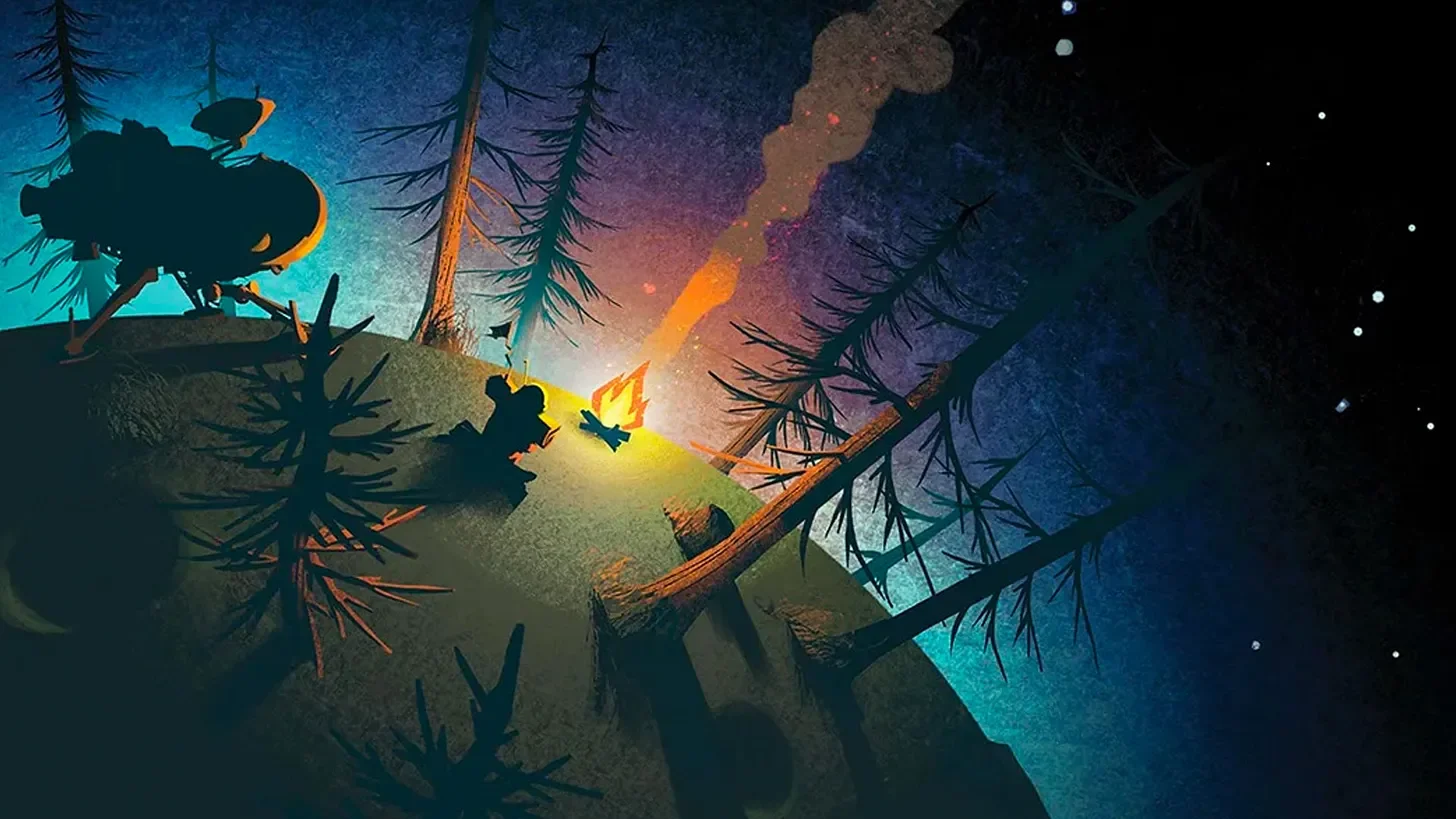
On a subreddit for the video game Outer Wilds, a user posted a thread about wanting to get an Outer Wilds tattoo. To explain why, this user wrote: “It really helped me reawaken my curiosity for the unknown and helped me come to terms with my fears of death and what might happen if everything I love is gone.” Anther responded to this saying “I plan to get ‘Be curious on your journey!’ My favourite quote and a good reminder in life.”
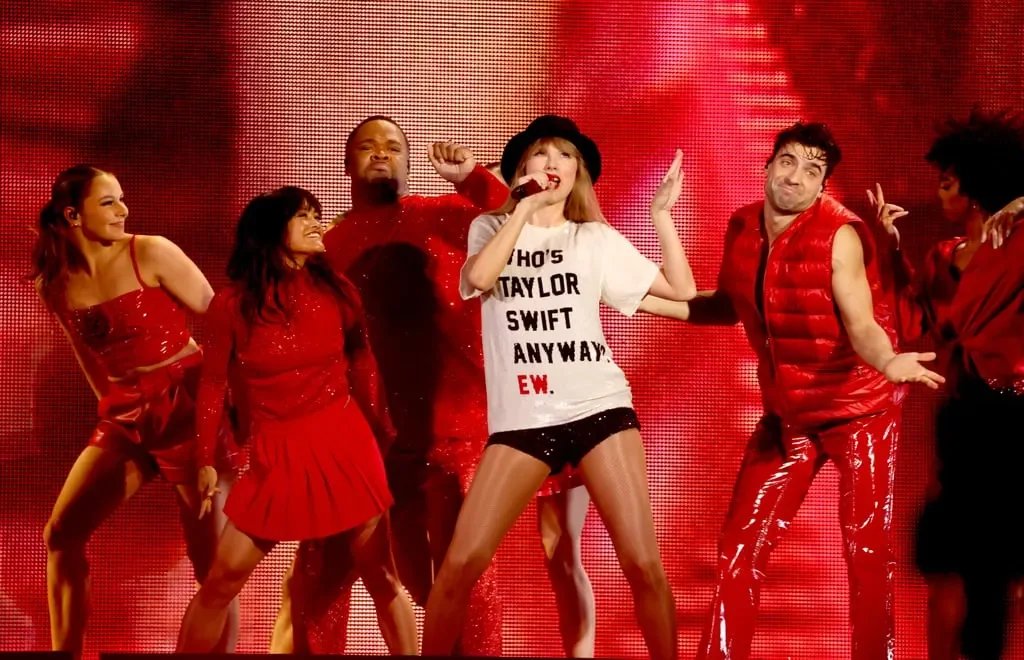
A Taylor Swift fan told me about how some of her songs helped them process her feelings about growing up with an alcoholic father. “I remember listening to that song and thinking about my dad, and how he’d be like ‘I’m so sorry, I got drunk and was a bastard’ but then he would just do it again.” Another fan of Taylor Swift told me about an abusive ex she left with her young son, and now they both listen to “The Smallest Man Who Ever Lived” and sing it together to remember their survival.
Both of these people found not only a song to resonate with, but one they can use to better describe their own life and history. They share the songs as a way to share a piece of themselves. They turn to songs as a way to deal with the troubles and difficult emotions in their life, but also a way to find and harvest joy.
Popular culture is also a reflection of our culture. As much as its for the masses, the masses are the majority of our society. If we want to know what our society privileges, what it fears, what it feels, how it grieves, what roles people are expected to fit in, what roles are allowed to be broken. Studying a story gives us insight to our society.
So, here, on Incidental Mythology, that’s exactly what we do. We take our contemporary myths and use them to understand our society. How do we structure our world? What do we most fear? What do we most love? What does it tell us about the role of women, or men, or those who are neither? How do we die? And, probably the most important and all encompassing question: how do we live?
If all this sounds good to you, then I hope to see you around. We have so many myths to study, and more are being made every day.
1 Frazer, James George. The Golden Bough: A Study in Magic and Religion. World’s Classics. Oxford University Press, 1994.
2 Campbell, Joseph, and Bill D. Moyers. The Power of Myth. 1st ed. Doubleday, 1988.
3 Sepie, Amba. ‘More than Stories, More than Myths: Animal/Human/Nature(s) in Traditional Ecological Worldviews’. Humanities 6, no. 4 (2017): 78.
4 Asimos, Vivian. Digital Mythology and the Internet’s Monster. Bloomsbury Academic, An imprint of Bloomsbury Publishing Plc, 2021.