Structural Anthropology and Literary Criticism
As I enter the third quarter of the year, I’m also entering the third quarter of my personal curriculum on Gothic literature. And as this whole year’s study of the genre continues, I’m starting to find my feet in the research flow of it all and seeing thoughts and connections between myself and the lit studies.
Recently, I had a bit of a reflection on what it means for an anthropologist to be studying literature, wondering at the connections and disconnections between these two disciplines.
I wanted to continue this thread with something I’ve been seeing connections in for some time: structuralism. I have a background in structural anthropology, spending a lot of my academic life doing structural analysis of modern pop culture mythologies like the Slender Man, and the first season of Stranger Things.
And, for those who are on the anthropology side of things, there is also a structural study of literature! And maybe for those who are interested in more of the literature side of things may be surprised to have read the above paragraph all about me doing structural anthropology.
So, today, I wanted to consider the similarities of these two approaches, the critiques they garner, and how they relate to one another both historically and functionally.
Theories Behind Structuralism
Academia is not exactly immune to the nature of humans clinging to fads. People love to have ebbs and flows to what they garner, finding new ideas when others bring them to us, and discounting others when something new and better comes our way. Sometimes, those are the reasons we discount and pick up things. Other times, the nature of something simply being “out of fashion” is enough.
We may be used to hearing these things when it comes to fashion or music genres, but rarely in terms of academic discourse, but it happens just as much there. The social sciences doesn’t call them fads, of course - that’s far too pedestrian. Instead, they like to use the word “turn”. It’s the ontological turn, the embodiment turn. And structuralism was one of these moments, too.
Structuralism was not just anthropology, but also biology, linguistics, sociology, literary analysis, philosophy and psychology - just to name a few. Most of structuralism, though, has its roots in linguistics.
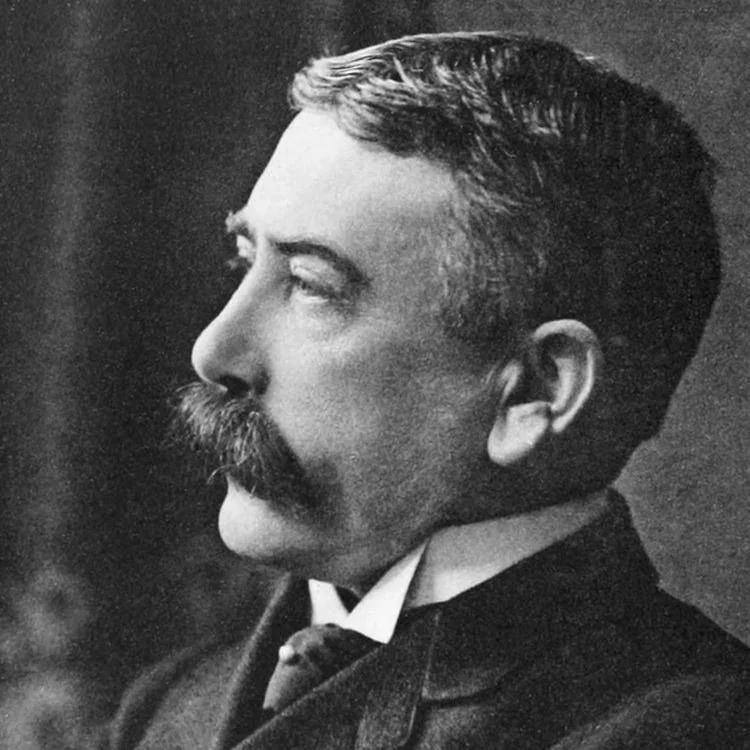
Ferdinand de Saussure, a Swiss linguist, is at the base of everything. I’m going to provide a very quick overview here, but for any of you linguists out there reading this, I recognise this will be less than probably what you’d prefer. Sorry!
In essence, Saussure argued that the words we have for a thing are not inherent in the things meaning. In other words, there’s nothing inherently doggy about the word dog. These words we use don’t hold anything beyond the meaning we assign to them. So, in order to understand the idea of a dog, we have to look deeper than just the word.
Saussure saw language as working on two levels: the initial level of the word, and a second layer underneath that of a kind of meaning. This is where connotation and deeper social and cultural meanings exist.
Structuralism in both literature and anthropology are directly derived from Saussure’s work, and the double layering of meaning and words is within both studies.

Roland Barthes
We’re going to start with a French literary critic who really laid the foundations of structural literature studies. I intended on trying to paint these details of scholars and influence in a kind of chronological order, but things are a bit more complicated than that. These academics influenced each other, growing off of different thoughts and views almost simultaneously.
Roland Barthes is a topic I want to cover a bit more of at some point - I’ve been toying with the idea of doing a video or post about his idea of death of the author because of how often people just get that wrong - but that’s saved for a different time.
This time, we’re looking instead at his work Mythologies, which contained - much to my own enjoyment - notes and essays on pop culture. I mean, let’s be honest, he’d be my bestie. The primary argument in Mythologies was that the powerful in society assert their values through the culture around us. Our pop culture, therefore, is the result of the power dynamics, and the pressures of the structure of society.
Based on the work of Saussure, Barthes argued that the construction of myths is a result of two levels of signification. The first is the language-object, and then under that being the metalanguage, the system of meaning that is transmitting the myth.
According to Barthes, the powerful bourgeois communicate through the meta-language. Connotations, double meanings, and deeper considerations to the words is where the meaning and intention of a story and narrative exists. To truly understand these myths, we have to look at the what the words are doing and conveying, and not just the words themselves.
There is actually a lot of similarity in thought between Barthes and our next scholar.
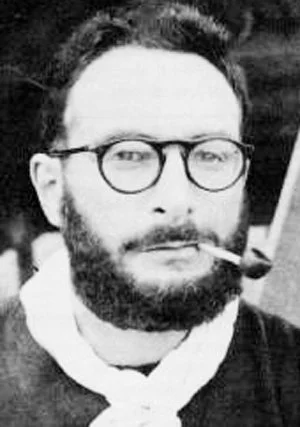
Claude Lévi-Strauss
Literary studies actually pulls from the founder of structural anthropology, Claude Lévi-Strauss. Lévi-Strauss was a French anthropologist who specialised in the study of mythology, analysing them using an idea of various structural elements underlying the narrative of the story.
Quick fun fact, Claude Lévi-Strauss is from the same family as the Lévi-Strauss jeans guy. They were cousins! Anyway, on to the anthropology…
Like Barthes, Lévi-Strauss saw myths as functioning on more than one level, and also like Barthes, saw language s consisting of more going on than just the words themselves. For Lévi-Strauss, the words we use reveal to us the way we structure our thoughts.
Essentially, as we grow and develop in life, we learn not only what things are, but how they are grouped and relate. We define things not just by the word, but also in how they relate to one another. For example, we see a big furry thing and learn that’s a dog. And then we see a smaller less than furry thing, but that’s also a dog. And the thing that’s the same size as the small dog isn’t a dog at all, but a cat! Which, while a cat isn’t a dog, is an animal like a dog.
These are simple examples of the kind of definitions and relations that our society teaches us as we go. We create networks of in-groups and out-groups as we go, with boxes neatly labelled and everything neatly fitting within.
As we learn about what these categories are, and what is in them, we also learn how these various categories relate to one another. Can something that was in one category move to another? Or is it that once sorted, that’s it - no alteration?
These categories and their relations are socially and culturally derived. How we categorise and relate is different than how someone else may do that somewhere else. Like Barthes, this can also be ways in which those in positions of power maintain that level of control, but it can also be far less direct and more subconscious.
The idea of structural anthropology is that we can take our cultural narratives and uncover these cultural and categorical understandings. We start with the narrative level - just the words as they are presented to us as story - and then move through them, slowly unpacking the meanings, categorise, and relations in order to better understand the way the culture and society understands the world around them.
Similarities and Critiques
As you can see, there are many similarities between the two. Both literary and anthropological structuralism work to dig into the words to find something beyond the words - searching for meaning in the subconscious and actively conscious underlying social and cultural thoughts. They both lean in on one another, and this make sense. Mythology often bridges the gap between disciplines, and exists in literature as much as social and cultural anthropology. Lévi-Strauss specialised in mythology, and therefore shares something with Roland Barthes - though Lévi-Strauss did not like considering popular culture as similar to traditional mythologies.
One of the many criticisms laid against both forms of structuralism is that they over-simplify and flatten the world of more complex and beautiful narratives. They see structuralism as making mythologies and literature function as a kind of code, almost like a paint-by-numbers culture. Structuralism is, however, not about coding the world but rather about trying to see the world exactly as a group of people do.
Literature and Anthropology both try and see how a culture constructs a narrative and why it works that way. It snot just a “how to put it together” but why from an emotive level. If something is horrifying, why is it horrifying? Why does it elicit these emotions from us? And what does it say about our society and culture that these things horrify us?
There is obviously far much more that can be said about this, but I wanted to see these connections for an important reason - I, myself, am a structuralist in anthropology, and I’ve noticed how similar these aspects are. And, because of that, I want to dig a little deeper into what I can do as an anthropologist with the study.
So, stay tuned for more on this!