Anthropology Lessons: Love Island All Stars
I always make the joke I watch reality television as a practice of anthropology. Mostly, it started as a goofy defence that wasn’t actually anything real or solid on the matter. But, as time wore on and the reality shows started to add up, I realised this joke had a very large boulder of truth to it.
I will die on the hill that reality television watching is essentially a practice of unethical anthropology. Sometimes, this is even discussed openly on the shows themselves. A lot of reality shows try to dodge around the discussion of the show as show, and instead hide it in other phrases. Real Housewives is “this group of friends” rather than a cast. For our purposes here, Love is Blind constantly refers to itself as a “social experiment”, not a reality show.
And to some extent, that’s an absolute farce. There’s no actual consideration of how an experiment actually needs to be carried out. But, that’s why I said it’s unethical. There is something really fascinating about watching people and their reactions to things in general, and when watching it in extremely unrealistic circumstances, I could write so many papers.
So, I really do stand on the belief Love Island, and reality shows more generally, really show us a lot about people in our contemporary society. Obviously, the situation is contrived, inauthentic, and produced, but the people are true and will act in ways true to people.
I wanted to highlight, today, some of the contemporary issues which have come to light during my most recent watch of Love Island All Stars.
Love Island All Stars is a special version of the British dating show which airs in the winter. It brings back previous contestants to see if, with others who have been on the show, they can find their special someone. Or, as is most typical on dating shows, find a girlfriend or boyfriend which lasts for maybe a few weeks on the outside.
One of the interesting things about All Stars is, because of the passage of time between appearances, the contestants are (often) in a very different kind of place on the second time around. Most of the female contestants are in their late twenties, early thirties. They are no longer looking for a fun romp to rope in brand deals for an influencer job. They’ve done that. For these relationships, topics of conversation are actually talking about things on the outside, thinking about where someone is in life and whether a potential marriage is actually on the table.
But, let’s talk about reality television more generally.

The Social Game
This is Love Island, not Friendship Island.
Man, this is the kind of thing you hear a lot on reality television. The classic villain phrase of “I didn’t come here to make friends, I came here to win” is another which falls in a similar vein. Hell, turn on any reality show, and you’ll here something along these lines. I just recently heard something similar on the Traitors - this game is called Traitors, not friendships (or something like that).
But, is it true?
While the point of Love Island is to find a romantic partner and connect on that “love” facet. It is the pitch of the show, the hook which gets people in, but to be a good “player” on the show, it necessitates a bit more.
Let me explain. The show is essentially a popularity contest. Contestants are at risk of being removed from the show if they do not have a solid romantic partnership, but couples can also be removed from the show based on popularity votes. Love Island, like Big Brother, popularised the idea of simultaneous airing. Essentially, the show is filmed one night, and then aired the next, give or take a little bit of shifting. This means the viewing public have some direct impact on the game. So when we’re talking about popularity votes, it’s both those inside the show as well as the public outside. If we don’t find you interesting, then you’re out.
So, essentially, the point of the show is romance, but remaining in the show requires platonic relationships.
And here’s the thing, this isn’t unique to Love Island. This is just reality shows in general. Most shows, regardless of their original conception, are actually social games and highlight those who are able to maintain these aspects effectively. Traitors is another example of this, though that’ll be saved for a different post on a different day.

The balancing of these social dynamics adds an interesting level to the study of people in these situations, and yet not an unrealistic one. We are all in situations in life where, even if we are supposed to be judged on one aspect of our lives, the social requirements take over. Being on good terms or “playing the game” as its sometimes put, can nudge someone over another option who is actually a bit better at whatever is at hand.
In terms of things like Love Island, obviously its hard to be “better” than another person at being romantic with a partner, so it’s harder to see these things come to fruition. That being said, sometimes there are people who are able to cling to life because they are liked over others who are in relationships but the audience, and even the other contestants, could give or take.
So, let’s look at our current season of Love Island All Stars. This one features Scott van-der-Sluis, a semi-consistent figure in Love Island universe. He is known for speaking truth even when not asked for, often rubbing people the wrong way. Interestingly, he does this often more for the women on the show, rather than the men, and therefore is more frequently found hanging out with the women. The gender roles often found in shows like this, and also in our contemporary culture outside of the show, is how women group together and men do the same, only in competition with someone of the same gender if both vying for the same romantic option. When someone alters this perspective, it shows more complicated dynamics of other social constructions at play.
Gender Roles
Love Island is a purely heterosexual show, and so far only cis gendered as well. This is the important caveat to give before digging into discussions of gender and gender dynamics on this show. Most typically, these are more common in heterosexual situations, rather than more queer dynamics.
Love Island comes laden with expectations on its contestants, and these expectations are based on modern dating. We can learn a lot about the expectations on young men and women, and what weird messages we’re being given about how love, sex, and dating are supposed to happen in our society based on how dating shows present these aspects to us.
One important difference for specific gender dynamics we can see is in the examples of Lucinda and Samie. Samie is perhaps the example of what is typically considered the most desirable from women in the UK - she is more virginal in the sense she keeps her sexuality a little closer to her chest, and yet is also able to exude it and use it when necessary. Women are forced to walk a very thin line between being sexually reserved, and yet not so sexually reserved as to seem untouchable. If she is too reserved, too virginal, too pure, than she is unattainable and untouchable. She has to be corruptible and desired, and yet also not open. It’s a fine line often fallen from, and yet (in terms of male attention) Samie walks it well.

We can put this in direct contrast to someone like Lucinda. Lucinda, on the other hand, was almost immediately painted as slutty (though not in those words) by the contestants because she openly and happily flirted and flipped from man to man as she sought her partner. When contestant Belle was out of the villa on a test with a group of Americans in a different house, Lucinda took the opportunity to move on Belle’s partner Sean.
Lucinda was demonised for being open, for openly persueing different men. She is flirty and goofy and laughs openly. She’s painted as un-serious and therefore not as desirable as someone like Samie.

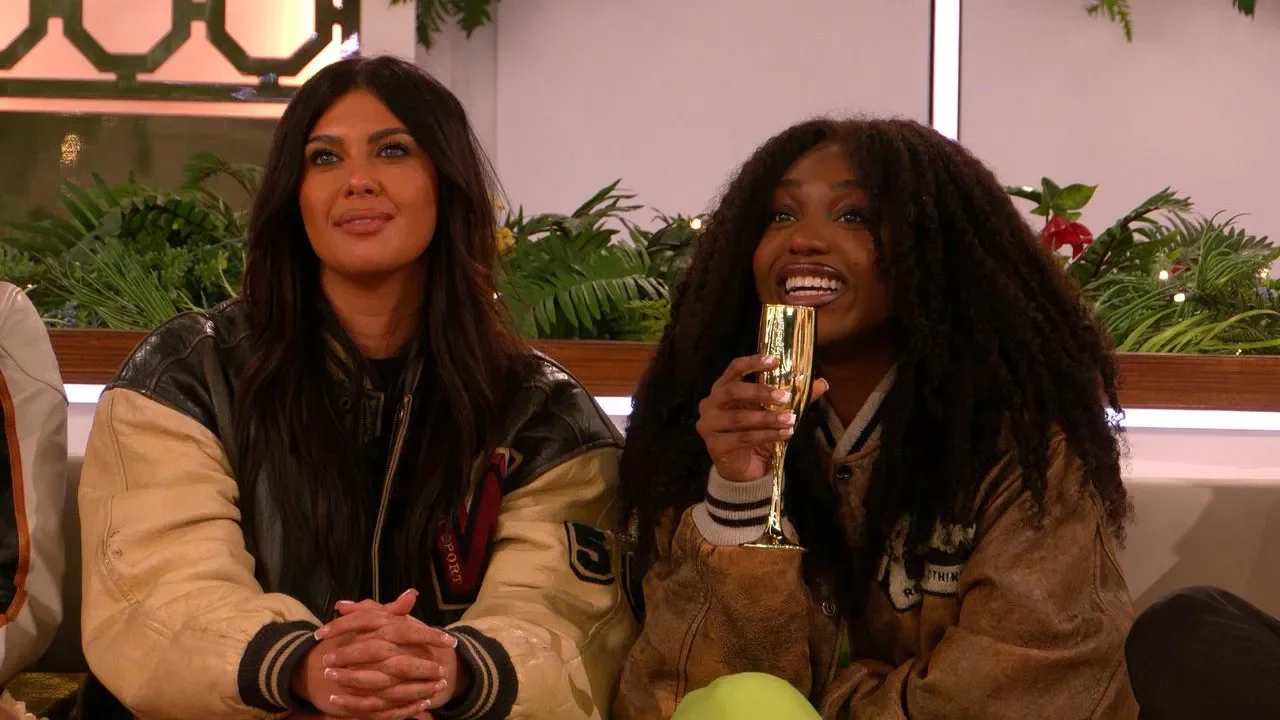
This is, of course, also a dynamic specific to white women. There are women of colour on the show, and they come with their own special host of complicated social dynamics. Black women are often forced to maintain their cool, even when given the same set of socially intense circumstances as everyone else. Lighter women, like Belle, can scream and yell and its seen as somehow a level of women empowerment (to an extent, as that also backfired after awhile), but women like Whitney and Leanne must maintain a cool countenance and are unable to show their anger without getting the negative side of the social game. In fact, Whitney’s constant control, which has more or less remained firmly intact throughout both seasons of her tenure on Love Island, can be directly compared to people like Belle who don’t have to concern themselves with it as much. Despite often being dealt the same hands, they both handle things completely differently. In part this is because they’re different people, but its also to do with how they understand the social environment they find themselves in.
More Lessons to Learn
This is obviously just some of the social and cultural dynamics we can watch play out on our screens when we watch a show like Love Island. And I’ve had so much fun typing this up I think I might make this a semi-regular type of post: what am I seeing in the reality tv I’m watching? Maybe at least then I can pretend it is actually work.