The Haunting of Taylor Swift
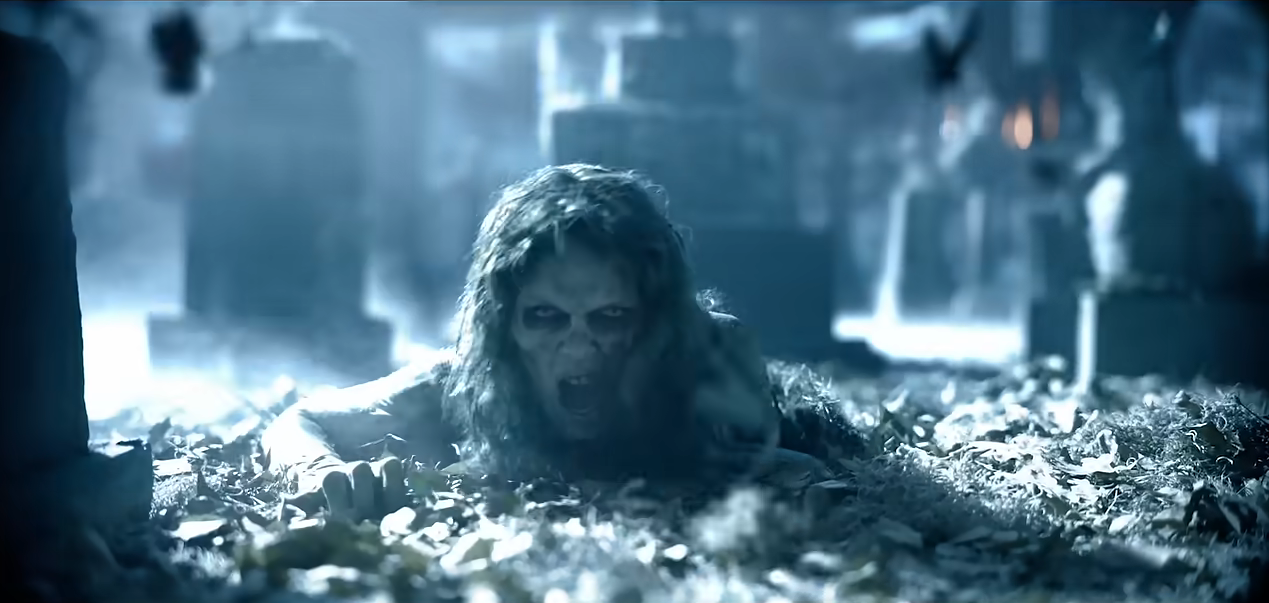
Taylor Swift has, for a very long time, been haunted. There are some references to this possibly being over in The Life of a Showgirl, but I let a little more time pass before I go to assume that’s the case. Ghosts seem to haunt Taylor Swift’s lyrics, from direct references to more subtle imagery. She comes with images of graves, death, the returning and lingering of the dead. Sometimes, she’s the one clawing her way out of a grave, like in the music video for “Look What You Made Me Do”. Sometimes, they are forms which mock her from the terrace, dancing the love she has missed out on.
I’m a monster girly if nothing else. I’ve spent a lot of time thinking about monsters, and that’s for one very important reason: monsters are incredibly important anthropological tools. When we as humans develop, fear, or even cling to monsters, its because of what they actually represent for us. As Jeffrey Cohen notes in his treatise on the monster, monsters are creatures of categorical crisis. In other words, they show us our social and cultural categories, and what may wait for us beyond these.
We, as humans, move through the world categorising things. It’s just what we do. What’s a tree, vs a bush? I talked a lot about this in my previous post on Dirt is Matter Out of Place, so I won’t linger too much on it here. But one thing you need to know is that these categories are socially and culturally based. In other words, there is nothing inherent in any of it - they’re things we’ve devised to be that way because that’s what we’ve decided. And we can meet other people, from other locations, who have completely different categories.
This is also why monsters are so different in different areas of the world. And, it’s also why monsters can change over time, and change when it enters new communities and new cultures. The way a zombie is understood in its original Haitian culture, for example, is massively different to how it’s understood in white western pop culture.
As much as we’re going to be talking about ghosts today, we’re going to be talking about Taylor Swift’s ghosts specifically. Monsters are context specific, so let’s look at the context. For Swift, her ghosts are representations of alterations in time. They represent the lingering presence of something that is already dead still clinging to life in the corners of the mind. Ghosts here are demonstrations of the way things can be present and not present simultaneously, alive and dead simultaneously. It’s the crossing of boundaries and categories which typically cannot be at the same time.
So, let’s talk about it.
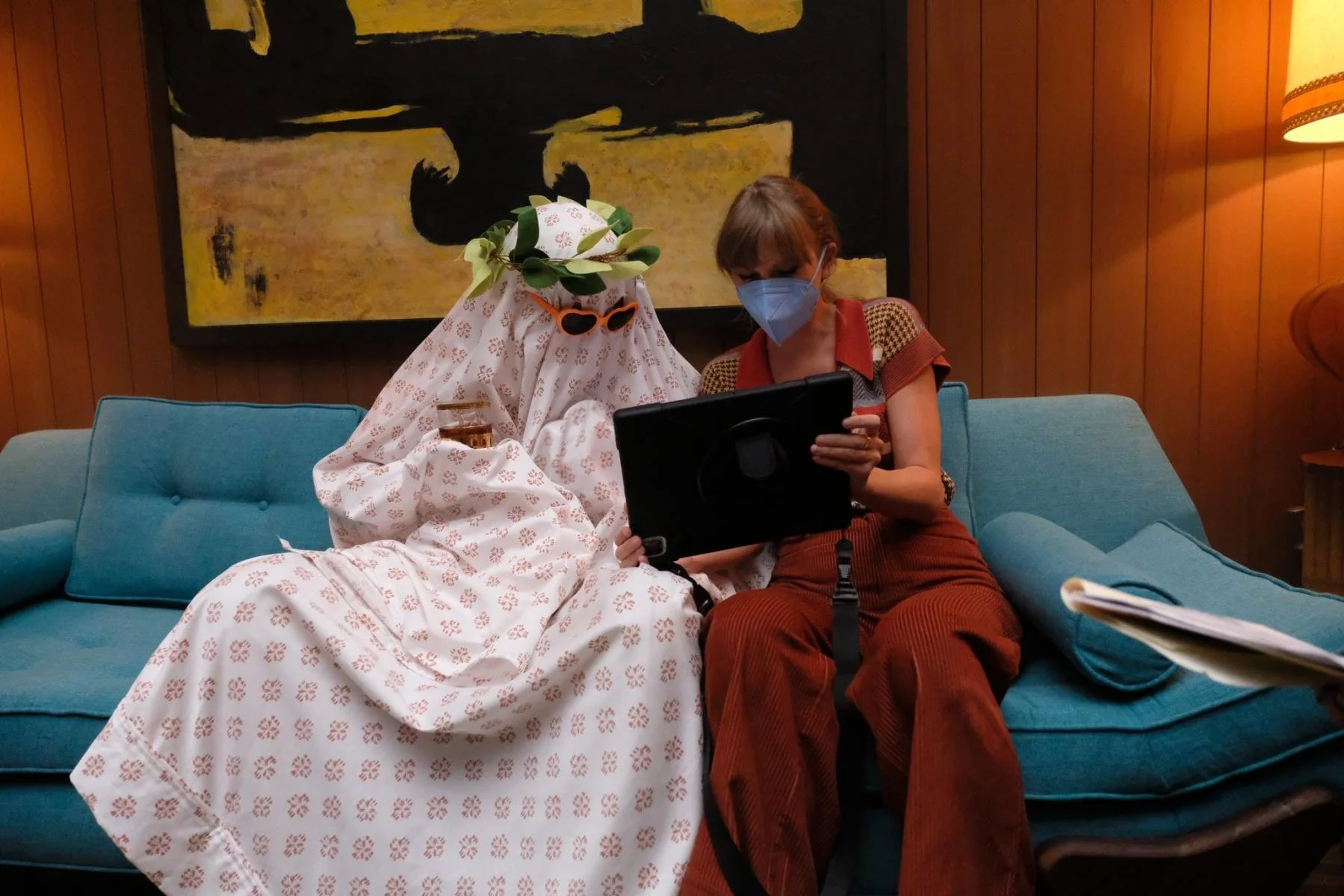
I think to truly understand the use of ghosts and the lingering dead in Taylor Swift’s work, we need to start with a song - and it’s not any of the one’s you’re proably thinking. We’re not starting with “seven” or “How Does It End?”. No, we’re talking about “marjorie”.
“Marjorie” is from one of Taylor Swift’s pandemic albums, evermore, and is specifically about her grandmother. In this song, Swift reflects on the relationship she had with her grandmother, but focusing on the regrets she has about not engaging with her enough. Her grandmother was an opera singer, and therefore had a lot of things in common with Swift’s own dreams and endeavours.
The autumn chill that wakes me up
You loved the amber skies so much
Long limbs and frozen swims
You’d always go past where our feet could touch
And I complained the whole way there
The car ride back and up the stairs
I should’ve asked you questions
I should’ve asked you how to be
Asked you to write it down for me
Should’ve kept every grocery store receipt
‘Cause every scrap of you would be taken from me
Watched as you signed your name
Marjorie
All your closets of backlogged dreams
And how you left them all to me
This bridge really captures what I’m talking about here. She reflects on moments with her grandmother, swimming in frozen waters, but how she disrupted what could have been a moment. She regrets how she would complain about these moments rather than embracing them. She also wishes she had asked more questions - a quite common sentiment younger people have when they think they know a lot about their older family members.
A common trope in a lot of Swift’s lyrics are the lingering questions of “should”. Regrets, considerations, the lingering questions of “what if” are commonly held moments.
But there’s a reason we’re picking apart this particular song, and that’s the chorus:
And if I didn’t know better
I’d think you were talking to me now
If I didn’t know better
I’d think you were still around
What died didn’t stay dead
What died didn’t stay dead
You’re alive, you’re alive in my head.
The entire notion of “what died didn’t stay dead” is the whole point of the ghosts for Swift. Just because something is dead doesn’t mean it doesn’t still exist all around us. Her ghosts are the dead still clinging. The category of dead doesn’t mean as much anymore. It’s not a forever category.
This notion can sound romantic, especially when thinking about a lost family member. Remembering them as not fully dead, but still around can be a lovely thought. But, this is not how it always is for Swift, or for any of us.
Swift has another common death reference, that is to herself. As depicted in the “Look What You Made Me Do” video, she sees herself as “rising from the dead” all the time - which she means in two different forms. The first is in reference to her ever evolving eras and forms, constantly re-inventing herself in each album. The other is in her own “cancellation” which she was able to recover from.
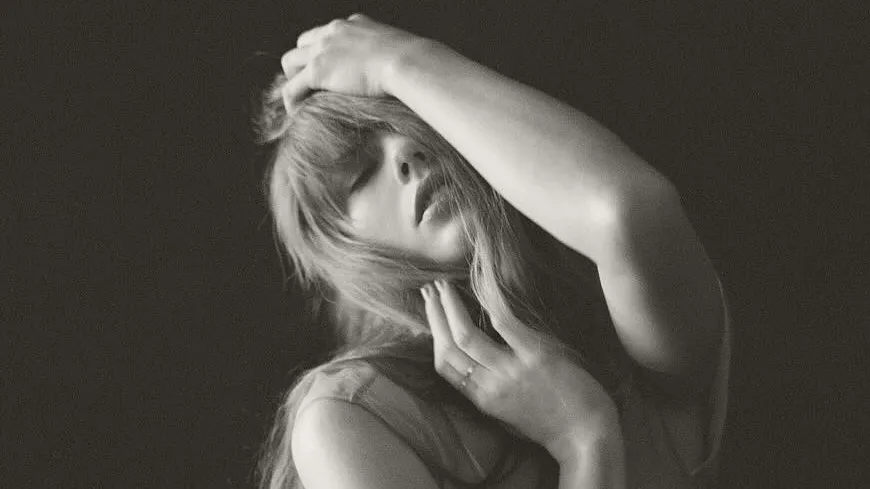
The other common dead reference is in relationships. Relationships can die, and yet still cling on around you, either in constant thoughts of what if and should’ve. It’s also possible to have a relationship die, and yet you’re still, for some reason, in it. Both create aspects of ghosts which linger around you and remind you of what is no longer there.
The discussion of long dead relationships are some of the most beautiful depictions of ghosts. “How Did It End?” off the Tortured Poets Department takes the form of an autopsy, looking over a now dead relationship and trying to study what it was that killed it. This was put in context to how people push to know “how did it end?”, and reflecting on how hard it is when you just don’t know. The background of death and autopsy is already present in this song, but the ghost comes full blown in the bridge.
Say it once again with feeling
How the death rattle breathing
Silenced as the soul was leaving
The deflation of our dreaming
Leaving me bereft and reeling
My beloved ghost and me
Sitting in a tree
D-Y-I-N-G
While the actual “ghost” detail doesn’t come until the end of this bridge, the death references throughout the whole song feels like it’s leading to this moment - the moment the ghost is there. And, like the relationships we continue to linger around, hope for, and exist with, this relationship is already dead.
Perhaps the song that best encapsulates the experiences of ghosts more generally is “loml” from Tortured Poets. Tortured Poets had a lot of ghost references, far more than I will be able to recap here. Maybe that’s a chat for a different day, but for now we’re only going to look at “loml”.
The interesting thing about “loml” is the contradictory and multiplicity of meaning behind every lyric. Each aspect of the song is a duality, so much so that it feels almost like it’s about two people at once. Let’s look at the first chorus just to exemplify:
If you know it in one glimpse, it’s legendary
You and I go from one kiss to getting married
Still alive, killing time at the cemetery
Never quite buried
In your suit and tie, in the nick of time
You low-down boy, you stand-up guy
You Holy Ghost, you told me I’m the love of your life
You said I’m the love of your life
About a million times
Concepts and images are constantly going against one another in contradictory elements. “Married” immediately follows “cemetery”, along with the imagery of “suit and tie” - an outfit worn both at a wedding and at a funeral, not clarifying which of the previous two it is. Another two contrasting points immediately follow: low-down boy, stand-up guy. These kinds of inconsistencies follow throughout the song. “When your impressionist paintings of / heaven turned out to be fakes / Well, you took me to hell too” has the contrasting notions of heaven and hell. “Valiant roar” immediately followed with “bland goodbye”.
Inconsistency, contrasting points, categories existing which should not exist - especially how they exist - is the realm of ghosts. Ghosts defy the categories we typically take for granted, the kind of things we do solely to find and cement our location in the world. Buried and yet there to see, neither wholly dead nor truly alive. Ghosts belong to the past but are also here in the present. They are unreal, and yet visible. Human, but also inherently and wholly inhuman.
Ghosts are out of place and out of time. They disturb our general knowledge of the world. The take everything reliable and relatable and flip it into something other. They, essentially, unsettle us and our solid foundations of knowledge.
Therefore, ghosts and hauntings are truly wonderful metaphors for suddenly losing knowledge and faith in yourself and the world around you when your own foundations are lost. When memories of the past make us feel like we are no longer in the present, we live haunted.