Anti-Fandom and the Power of Hate
Being on the internet in general means you’re exposed to all sorts of very strongly held opinions. People can expose love and admiration almost at the drop of a hat. But they can also reject, hate and express disgust in the same breath.
I’m currently in the middle of doing a research project on Taylor Swift and mythology, and so I’ve been very exposed to both those who are excited and feel seen and loved by the subject, but also those who feel any mention of Taylor Swift’s name is freedom to denounce and claim hatred for her. I even had one commenter, when I was asking for responses to my survey from people who like Taylor Swift’s music, I must be stupid and a laughing stock of the university which gave me my degree if I was studying Taylor Swift.
So, today, I want to talk about the opposite side of fandom: anti-fandom.
For those who are not aware, fandom studies has become a strong force in the study of popular culture. It has long reaches into the history of pop culture studies, though is still relatively new when compared to other disciplines and areas of expertise. Fandom studies has gone through a series of different understandings, from early approaches which saw fans as some strange fanatic Other, to more contemporary understandings of seeing fandom almost everywhere we look. Fandom, if it can be pinned down to something simple (which perhaps the argument against this will be explored in a later post), would be defined by love.
When I reach out to people to answer my survey as fans of Taylor Swift, I ask for things like “people who like her music” or “people who love her” - I try to change this up to not limit my approach. Love and admiration is often reflected in the responses, even when there is criticism to be shared. At the heart is always love.
Anti-fandom, then, can be seen as the opposite. Where fandom is love and admiration, anti-fandom is hate and disgust. Fandom scholar Jonathan Gray has, of course, given us a definition of anti-fandom to play with. According to him, anti-fans are “those who strongly dislike a given text or genre, considering it inane, stupid, morally bankrupt and/or aesthetic drivel”. This definitely lines up with my wonderful commenter, who saw little of value in anything which would even touch on Taylor Swift, let alone focus on her.
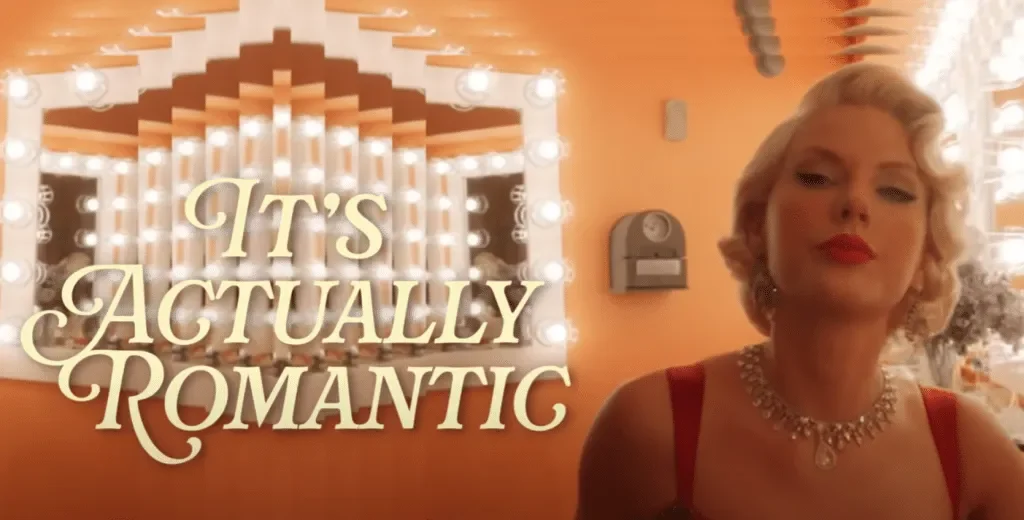
Many of these sentiments are also pretty on par for what we may see online more generally. Things being inane and stupid, and therefore not worth consideration. Things or people being morally bankrupt - and therefore enjoying the thing is somehow not even a difference in taste, but a difference in ethics.
Interestingly, when we get really into the dynamics of anti-fandom, the behaviours of the anti-fans are actually pretty similar, if not exactly the same, as those of the fans. There are anti-fans of Taylor Swift who have listened to every album, multiple times, in order to dissect the reasons they dislike it. They write long essays on substack, picking a part specific lyrics, detailed looks into outfits and choices on podcasts and other stage shows. The attention to Taylor Swift is on the same level as those who love her and admire her, sometimes even more so.
In order to really dissect anti-fandom, I want to take it into two separate conversations. The first is why people even do this in the first place, and why anti-fandom is so alluring to so many, and the second on the dynamic study of the emotions at the centre of it entirely. This particular post will be more of a study of anti-fandom more generally - in the future, I’d love to dig into a specific anti-fandom, and (let’s be honest) it’ll probably be Taylor Swift.
Community and Anti-Fans
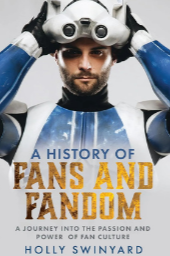
There’s a lot which can be said about fandom and its creation and maintenance of community. So much can be said on the matter that its far too much here. There are plenty of books on the matter. A historical view on the topic can be read in my friend Holly Swinyard’s book History of Fandom - they also summarise some of the more academic approaches as well, so may be a good start for some people.
Anyway, we can see multiple instances of fandom connection and community. To give a real world more anecdotal example, I was doing research at CoxCon - a convention for YouTuber Jesse Cox - back in 2017. I found most participants were not as interested in talking about the topics surrounding the con as much as the con itself. There was an excitement about being there whichwas palpable and hard to escape from (so much so I had to change the direction of my article).
One participant, who I chatted to while actually taking a break from the flow, told me about how their social anxiety seemed to flow away when coming to an event. The fear the person they are speaking to will be someone completely different was gone. They told me there, at that con, “everyone has the same values”. Which seems like a stretch for some, but in many ways can actually be true, at least to the. There is a sense of connection which goes far beyond simply the object of their fandom.
Anti-fandom works pretty similarly. Fandom creates communities of love, in the same way anti-fandom creates communities of hate. What makes loving to hate so much fun isn’t necessarily the emotive experience (though there is some of that, as we’ll talk about in the next section), but also in the communal experience. Jonathan Grey describes how this community identification and participation, even when centred around a figure of hate, can make anti-fandom quite pleasurable of an experience. Similar values can also be fostered here, which is why we see such powerful extremes in group mentality and cohesion in comments online which are aggressively racist or sexist in nature.
So, what are these values and connections being fostered? Well, we can see that being reflected in the emotions themselves.
The Emotions of Anti-Fandom
I think talking about some of the emotions connected to fandom is important - emotions like love and connection and support. Similarly, we need to talk about the emotions being fostered and secured in anti-fandom, and why they are so powerful.
One thing to note, is that emotions are not simple. Emotions are often based on a lot of factors, some of which cannot be easily understood, or are connected to elements far in the past and deeply rooted.
In their book the Cultural Politics of Emotion, Sarah Ahmed talks a lot about this. Ahmed shows how emotions are historically rooted, and are part of and inherent to preformative speech acts. This doesn’t mean preformative as in not real, but rather how emotions are part of our social performances, as much as many other aspects of ourselves. Ahmed’s view of emotions means,to really understand them, we can’t just see what emotions are, but rather we need to understand what it is they do.
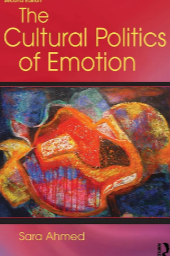
For example, Ahmed argues hate is a defence against potential damage. Hate becomes, then, a defence mechanism, brought about by worries of social, cultural, or physical harm. Hate doesn’t necessarily create a divide between peoples, but it definitely fosters one, separating the categories of an “us” vs “them” dynamic.
Therefore, we can see emotions are just one aspect of a far more complicated social network. The emotions we feel are bound up in the tangled mess of social hierarchies, social division, and even body politics. Some bodies are, inherently, more hated than other bodies for these reasons. Emotions can subordinate others.
Like hate, Ahmed also talks about feelings of “disgust”. Disgust is an emotion focused on creating and forcing relations between objects. To name something as “disgusting” is to relate it to other things already culturally understood as “disgusting”. Nothing is inherently disgusting in itself, but is branded this way through its connections to and through other objects.
I’ll be talking about this in my next post, but anthropologist Mary Douglas has a famous quote: “Dirt is matter out of place”. By this, she means something isn’t dirty when its outside in a garden - that’s where dirt is supposed to be. But a kitchen is dirty when there’s dirt there, because that’s not where it’s supposed to be. Dirty is when things are out of their expected space.
The notion of disgust, according to Ahmed, is working similarly. Nothing is inherently disgusting, but associating it with other things labelled as such makes it that way, and the more it is claimed, the harder it is to disentangle the objects from these relations.
Disgust is also associated with repulsion and rage: repulsion at the proximity of the offending object, and rage at the idea of the vulnerability one feels at possibly being exposed to it. Forced proximity to things, or people, or sentiments, or concepts, can create this rage, repulsion, disgust, fear, and hatred. And these emotions can bind people together to create communities centred on hate.
So Anti-Fandom…
Anti-fandom is immensely interesting in how similar it functions to concepts of fandom, while being so entirely antithetical to the concept of fandom itself. It may seem strange to some poeple that I’ve decided to put a chapter on Taylor Swift anti-fandom in my book, but one thing has been very clear through my own Taylor Swift research online: the anti-fandom is intense and real.
And, to get a little more serious about things, I think it also helps to show exactly why feelings like hate are so powerful these days.